Hot Tub Electrical Installation
"So the hot tub needs its own electrical circuit?", that's the question we hear from Kent homeowners about five minutes after the spa dealer mentions something about 240 volts and a dedicated line. The short answer is yes, and it's not a weekend DIY project.
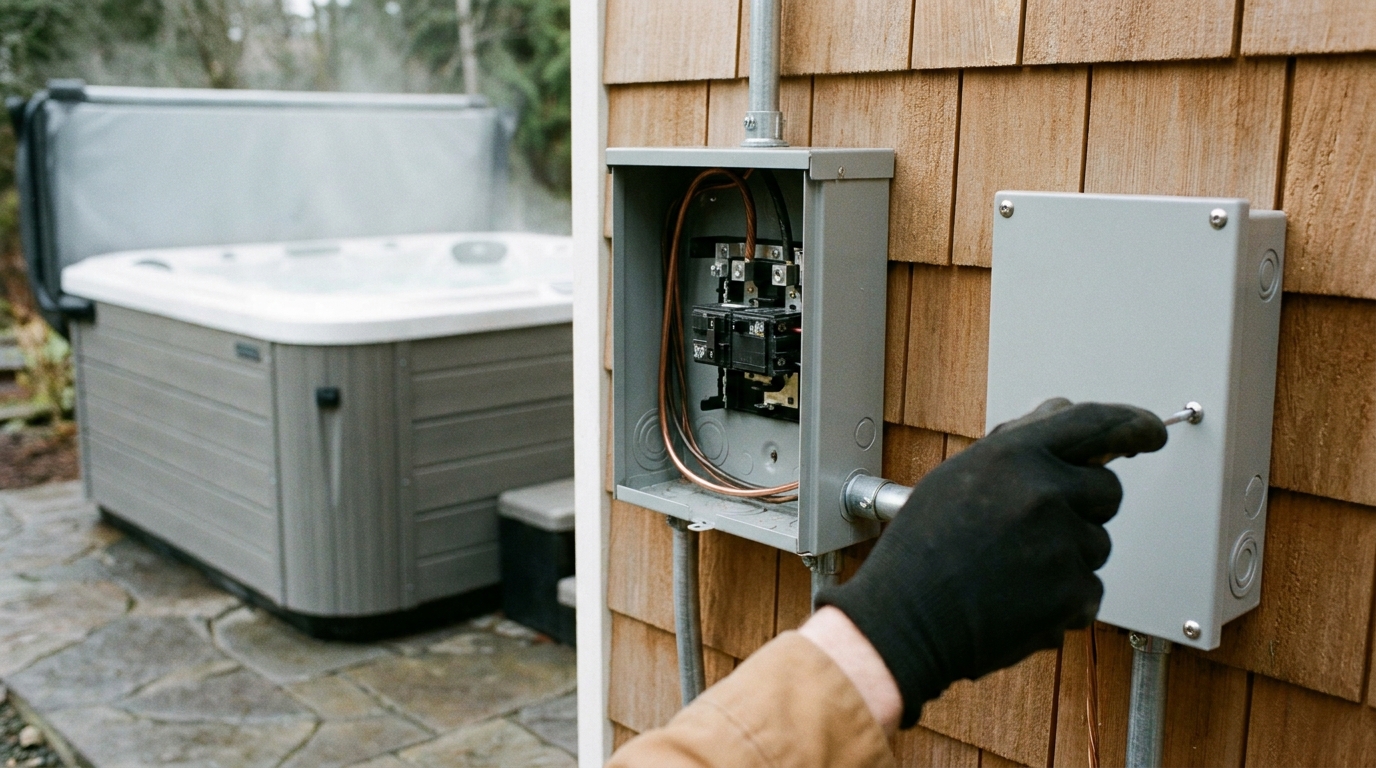
A licensed electrician installs a double-pole breaker at the panel, then pulls No. 6 gauge THHN copper wire through buried PVC conduit to the tub. Where does the GFCI disconnect panel go? Within 5 feet, in direct line of sight of the hot tub. That's code, not optional. The circuit runs on a 4-wire electrical system: two hots, one neutral, and one ground. Washington State L&I issues the required electrical permit before any work begins.
Phase NW handles panel work, trenching, the disconnect, and full inspection coordination. Start to finish, one team. Call us at (206) 487-7278 to get started.

Request This Service
Need An Electrician?
(206) 487-7278
Every hot tub installation follows the same core sequence, but no two homes are identical. Here's exactly what happens when you hire Phase NW for your hot tub electrical installation in Kent.
Step 1: Site Walk and Load Calculation. We start at your electrical panel. From there, we walk the route to your spa pad, measure the total run distance, check available panel capacity, and confirm the nameplate amperage on the tub itself. Panel full? That's a separate conversation, but we'll tell you upfront rather than halfway through the job.
Step 2: Permit Filing. Before we pick up a shovel, we file your electrical permit through Washington State L&I. A lot of Kent homeowners assume the City of Kent handles electrical permits. It doesn't. L&I is the permitting and inspection authority for electrical work in this jurisdiction. We handle the paperwork. You don't chase anything down.
Step 3: Service Panel Breaker Installation. We install a dedicated double-pole 50-amp breaker in your main panel. This circuit belongs to the hot tub alone, no shared loads, no tripped breakers on movie night.
Step 4: Underground Conduit Trenching. We trench from the panel to the spa pad, burying PVC conduit at least 18 inches deep per NEC requirements. Ever dug in Kent? Then you know the soil, heavy clay that holds water like a sponge. We pack proper backfill material and watertight fittings at every connection point, because soggy Pacific Northwest conditions absolutely demand it.
Step 5: Wire Pull. Four conductors of No. 6 gauge THHN copper wire, two hots, one neutral, one ground, get pulled through the conduit. Same quality electrical wiring installation we bring to every job. No shortcuts.
Step 6: GFCI Disconnect Panel. We mount a GFCI disconnect panel within 5 feet of the tub, in direct line of sight. The NEC requires a manual disconnect within that range so anyone near the spa can cut power in an emergency. Non-negotiable.
Step 7: Tub Connection. We connect the 4-wire system directly to your spa's control pack, following the manufacturer's wiring specifications exactly.
Step 8: Inspection and Hand-Off. Phase NW schedules the L&I inspection and meets the inspector on-site. You don't need to take a day off work for it. Once we pass, we test GFCI function, label the breaker, and walk you through the disconnect location so you know how to kill power if you ever need to.
Customers in Kent often tell us the part they appreciate most is not having to coordinate between multiple contractors, we handle the permit, the trenching, the wiring, and the inspection as one crew. If you've got a delivery date on the calendar and need the electrical side squared away, reach out to Phase NW at (206) 487-7278 or request a site visit online.
No two hot tub installations cost the same. Understanding why helps you read any quote with confidence.
Distance from panel to spa pad is the biggest variable. A tub sitting 15 feet from the panel needs far less wire and labor than one placed 80 feet across the yard. Every additional foot of No. 6 copper wire, PVC conduit, and trench adds up.
Trenching complexity matters just as much as distance. Digging through open lawn is straightforward. Heavy clay soil, established tree roots, or landscaping in the conduit's path all add real labor time and cost.
The dedicated circuit requirement isn't always 50 amps. A smaller 40-amp tub costs less to wire than a 60-amp model because wire gauge and breaker sizing change with the load. Always check the nameplate on your specific spa before requesting a quote.
Panel capacity catches a lot of homeowners off guard. If your main panel is full or undersized, freeing a slot or doing a full panel upgrade becomes a separate line item. We see this constantly in West Hill neighborhoods near Water Tower Park, where 1980s-era panels weren't built for modern electrical loads.
The electrical permit adds a fixed cost. Washington State L&I sets permit fees based on project valuation, and they vary by job. Phase NW pulls the permit on every installation. Every single one.
Finally, your disconnect panel type affects material cost. A basic non-fused disconnect runs less than a GFCI-equipped disconnect panel, though the GFCI version adds protection right at the tub. Worth the upgrade? In most cases, yes.
If your panel needs an upgrade to support a hot tub circuit, think bigger. What else might you want to power in the next few years? A growing number of Kent homeowners pair their hot tub installation with an EV charger installation while the panel is already open and the permit is already active. Running both projects together saves on labor, permit costs, and the hassle of scheduling a second round of work. Not a requirement, just worth knowing if an electric vehicle is anywhere on your horizon.
---
We'd love to come out, look at your panel, and tell you exactly what your Kent hot tub installation needs, no guesswork, no surprises. Give us a call at (206) 487-7278, and we'll get you soaking before the next round of Pacific Northwest rain moves through.