New Construction Wiring
You're building a new home in Kent and your general contractor just asked who's handling the electrical. You need an electrician who can start at the blueprints and stay through final inspection. New construction wiring covers the complete electrical system in a home built from the ground up, planning, load calculations, outlet placement, and circuit design all get mapped out before anyone picks up a tool.
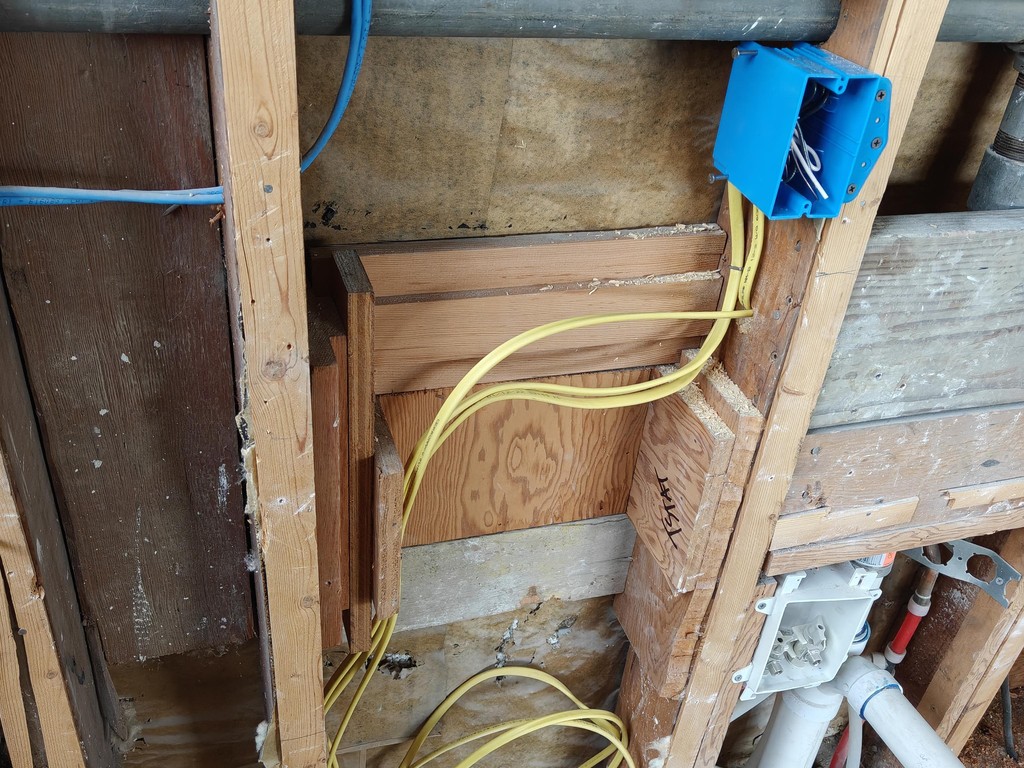
The process includes electrical rough-in (routing cables through open stud bays before drywall goes up), electrical panel sizing for current and future loads, GFCI outlets in every wet area, and AFCI breakers in bedrooms per NEC requirements.
Washington State adopts the National Electrical Code with local amendments. We pull the permits and coordinate directly with King County, neither you nor your general contractor has to manage that process. Phase NW covers every phase for new builds across Kent and the surrounding Auburn-Kent corridor.

Request This Service
Need An Electrician?
(206) 487-7278
Wiring a new home right means following a proven sequence. No shortcuts. No guesswork. Here's how our team handles every new construction project in Kent and the surrounding Auburn-Kent corridor.
Step 1: Blueprint Analysis and Load Planning
We start at the drawing table, not the job site. Our electricians review your architectural plans to map every circuit, calculate total electrical load, and size your panel before a single wire gets pulled. Catching a missing dedicated circuit or an undersized service at the blueprint stage costs nothing. Catching it after drywall? Thousands.
Step 2: Electrical Rough-In
Framing complete. Walls wide open. This is the only window when rough-in work is fast, clean, and affordable, so we make every minute count. We route branch circuit wiring through open stud bays and joists, install electrical boxes at code-correct heights, and run dedicated circuits to the kitchen, laundry, HVAC, and high-draw appliances like tankless water heaters.
AFCI breakers go in for all bedroom circuits as required by the NEC. GFCI outlets cover every wet area: bathrooms, kitchen counters, garage, and exterior. We follow the NEC outlet spacing rule too, receptacles within six feet of any doorway and no more than twelve feet apart along a wall. Easy to get right now. Expensive to fix later.
This is also when we pre-run conduit for future additions like EV chargers, hot tubs, or shop circuits. Our grounding system exceeds minimum code requirements on every build.
Step 3: Rough-In Inspection
King County requires a rough-in electrical inspection before drywall can go up, no exceptions. We coordinate directly with the building department so your general contractor's schedule stays on track. No delays, no callbacks, no waiting on permits. (Washington State electrical permits)
Step 4: Trim-Out After Drywall
Walls finished and painted? We come back for trim-out: outlets, switches, light fixtures, panel breakers, hardwired smoke and carbon monoxide detectors with battery backup (required throughout Washington State), and whole-house surge protection at the panel level. This final phase ends with a clean final inspection. Nothing left undone.
Production builders skip this phase more often than any other, especially along the Kent corridor from Meridian to the Auburn-Kent border. It's also the cheapest to get right during construction, because your walls are still open.
During rough-in, we pre-run Cat6 cable for hardwired network drops in your home office, living areas, and bedrooms. Wi-Fi is convenient, but wired connections are faster and far more dependable for video calls, streaming, and gaming. We also run conduit for security camera feeds, speaker wire for whole-home audio, and control wiring for automated lighting and smart panel integration. This is the infrastructure layer that makes connected devices actually work well instead of fighting each other for bandwidth.
Customers in Kent tell us the same thing after moving in: run more than you think you need. Retrofitting smart home infrastructure after drywall means cutting into finished walls, patching, repainting, and paying three to four times what rough-in work costs. So we plan for where your home is headed, not just where it is right now, extra conduit runs, spare pull strings, junction points that give you real flexibility five years from now.
Can you hire your own electrician for smart home pre-wiring independently of your builder? Yes, and most buyers in King County don't even realize this is an option. You should, before those walls close.
If you're getting close to the rough-in stage and want to talk through your floor plan, reach out to Phase NW at (206) 487-7278. We're happy to walk through what makes sense for your specific build.
King County consistently ranks among the highest EV ownership rates in Washington State, and that number climbs every year. If you're building a new home in Kent or along the Auburn-Kent corridor, pre-running conduit from your electrical panel to the garage during rough-in is the single highest-ROI decision you can make for a future EV charger installation.
Here's why. While the walls are open, running conduit takes minimal time and materials, a fraction of the retrofit cost. Once drywall is up, that same conduit run means cutting into finished walls, fishing wire through insulated cavities, and sometimes routing through attic space. A simple job becomes an expensive one.
We size the conduit to handle Level 2 charging circuits, typically 40 to 60 amps, so when you're ready to add a charger, the pathway is already there. No demo. No patching. No surprises. Even if you don't drive an electric vehicle today, the conduit pre-run protects your home's resale value in a market where buyers increasingly expect charging capability.
If you're building in East Hill, the Kent Valley, or anywhere in the 98032, 98001, or 98002 zip codes, we'd love to look over your plans and make sure the electrical is dialed in from day one. Give us a call at (206) 487-7278, we're right here in Kent and happy to talk through your build.