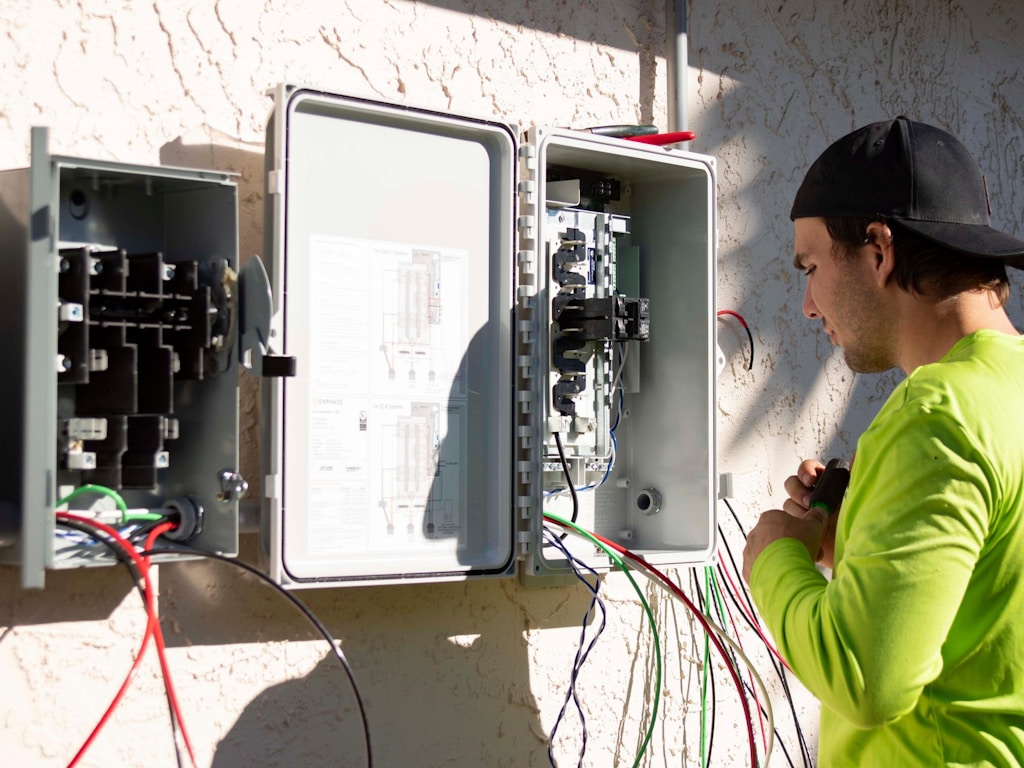
Portable Generator Interlocks & Inlets
A generator interlock kit is a mechanical device that mounts on your electrical panel door and physically prevents your main breaker and generator breaker from being on at the same time. This stops dangerous backfeed from reaching utility lines. A power inlet box is the weatherproof receptacle installed on your exterior wall where your generator cord plugs in, most residential setups use a NEMA L14-30, the standard 30-amp, 4-prong twist-lock configuration. Together, these two components let you safely power selected circuits during a storm outage without investing in a full transfer switch or whole-house generator. Phase NW installs interlock kits and inlets across Kent, Auburn, and South King County. (carbon monoxide risk indoors)
"I've got a generator in the garage, but I have no idea how to connect it to my panel without killing somebody." We hear some version of that from Kent homeowners every single October, usually right after the first big windstorm knocks power out along the Green River valley. The answer comes down to those two components working together.
The interlock kit's job is simple but critical: it physically blocks the main breaker and the generator breaker from being in the "on" position at the same time, protecting utility lineworkers who are out restoring power during the storm. The power inlet box gives you a clean, permanent connection point on the outside of your house, no extension cords snaking through cracked windows, no open garage doors inviting carbon monoxide inside.
Phase NW offers same-day availability in the 98002 and 98032 zip codes for interlock and inlet consultations.

Request This Service
Need An Electrician?
(206) 487-7278
Here's exactly what happens after you call us. No surprises, no guesswork.
Step 1: Phone Pre-Screen. Before we schedule anything, we ask three questions: your panel brand and model, your generator's wattage, and roughly how far your panel sits from an exterior wall. Five minutes, that's all it takes, and it saves you money. If there's a compatibility question, we sort it out before anyone drives to your house. Not after.
Step 2: On-Site Panel Inspection. Our electrician opens your panel and confirms the exact series and available slots. This matters more than most homeowners realize. A Square D QO panel and a Square D Homeline panel look nearly identical but require completely different interlock kits, a QO kit physically won't fit a Homeline door. Eaton Cutler-Hammer BR Series panels need a horizontal interlock variant. Siemens and Murray panels share interlock kit compatibility, which is one of the few easy wins in this process. We also inspect your main breaker, since the interlock mechanism slides against it. Damaged or odd-sized? We flag that immediately.
Step 3: Permit Pull. Washington State requires a permit for this work. Full stop. We handle the paperwork and scheduling with King County. Be cautious of any electrician who tells you a permit isn't necessary, it is, and skipping it can void your homeowner's insurance. Learn more about why this matters on our code compliance page.
Step 4: Installation. We mount the interlock kit on your panel door, install a dedicated branch circuit breaker sized to your generator (typically a 30A breaker for standard NEMA L14-30 setups), run conduit and wire through to your exterior wall, and mount a weatherproofed power inlet box. Most homes in Kent's East Hill and Panther Lake neighborhoods have the panel close enough to an exterior wall that this runs about 15, 20 feet of conduit. Straightforward work when the layout cooperates. (Washington State permit requirements) (NFPA 70 generator connection code)
Step 5: Test and Walk-Through. We run through the correct startup sequence with you in person. Start the generator and let it stabilize. Plug in the cord. Flip the main breaker off, then flip the generator breaker on. That order matters every single time.
Step 6: Permit Inspection. The final inspection creates a paper trail that protects you for insurance claims and future resale. Worth the wait? Yes.
If you've got your panel brand handy, we can walk you through Step 1 right over the phone. Reach Phase NW at (206) 487-7278.
Not every interlock kit fits every panel. This is the single biggest mistake we see homeowners, and even some electricians, make: grabbing a "universal" kit online and assuming it'll work. It won't.
The interlock bracket has to match your panel's exact brand and series, down to the model number stamped inside the door. Here's what that looks like across the Auburn-Kent corridor:
- Square D QO panels are everywhere in this area, and interlock kit manufacturers like Reliance Controls support them well. We trust their products and install them regularly. - Square D Homeline panels look similar but require completely different interlock hardware. Same manufacturer, different fit. - Eaton Cutler-Hammer BR Series panels need a horizontal interlock bracket, a detail that trips up DIYers constantly and leads to failed inspections. - Siemens and Murray panels share interlock kit compatibility, which makes sourcing parts straightforward when we're working in older Kent neighborhoods where Murray panels are still common.
Most homes in the 98032 and 98002 zip codes have 100-amp or 125-amp panels, typically enough capacity for an interlock install without upgrading the panel itself. We confirm this on-site before ordering a single part.
One more thing worth mentioning for the Pacific Northwest specifically: your power inlet box sits on an exterior wall, exposed to months of relentless rain. We install inlet boxes with proper NFPA-rated weatherproof covers and corrosion-resistant fittings. A leaking or corroded inlet is a safety hazard you'd never notice until it's too late.
Pairing your setup with a Generac portable generator? That's the most common brand we connect in this service area, and they work perfectly with standard NEMA L14-30 inlet configurations.
Get this done before the next Kent storm season turns your generator from a garage decoration into something you actually need. Give us a call at (206) 487-7278 and we'll figure out exactly what your panel needs.